

Diets are an important component of a specie’s ecology and functioning, offering insight to their role in the ecosystem, potential competition with other species, and other important biological parameters including niche breadth, trophic specialization, food selection etc. While a number of research articles are available on dietary composition of large carnivores, there is a scarceness of information on the dietary preference of the elusive Sun bear in the changing landscapes of Southeast Asia.
Sun bears with varied home ranges and highly diverse dietary choices, demonstrate significant adaptations and survival superiority even in degraded landscapes. However, with their shrinking home range sizes and demands for high-caloric food, which often drive them outside of protected areas, the risk of human threats has increased many folds for this little-known species. The increase in human footprints and anthropogenic activities both inside and outside protected areas has made it critical to understand how Sun bears use the landscapes across space and time, where and why they occur most, and knowing what food resources they depend upon to help facilitate coexistence and develop practically efficient conservation plans by protected areas managers.
The project aims to understand the flexibility in diet of Sun bears and develop a community-based conservation model for coexistence of bear and humans in the landscape. The defined objectives include;
- Determine the dietary pattern of Sun bears with respect to agricultural practices,
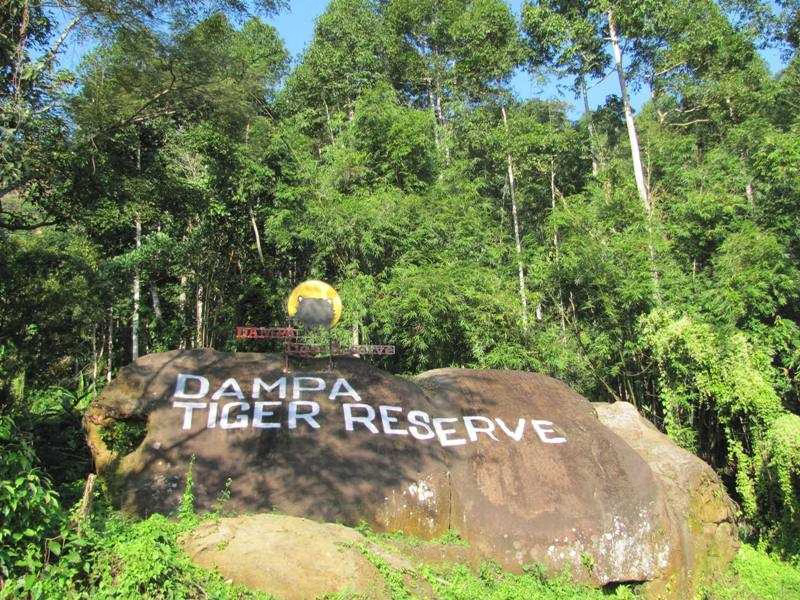
- Develop a risk probability map of human-sun bear conflict in and around Dampa Tiger Reserve based on occupancy and distribution,
- Understand the community concerns and experiences regarding conflict with sun bears including the nuanced context in which conflict occurs,
- Develop a community-based conservation model for best management practices including spatially-explicit diversionary feeding strategies, and share with communities through outreach workshops.