

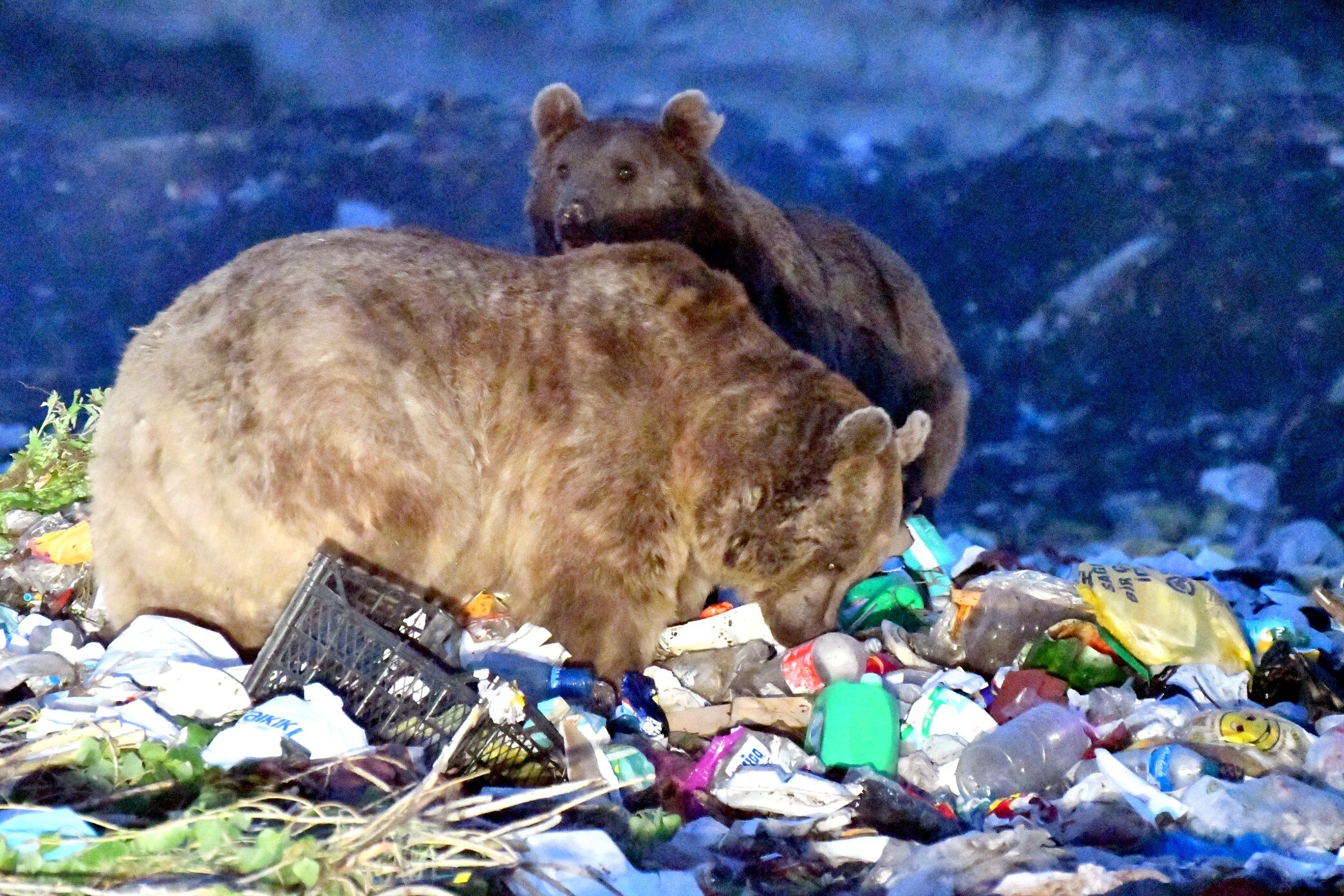
The Sarıkamış landscape in northeastern Türkiye represents one of the most ecologically significant forest systems for the brown bear (Ursus arctos) within the Caucasus biodiversity hotspot. Situated at the crossroads of the Anatolian and Caucasian biogeographic regions, this landscape functions as a critical ecological bridge connecting large forest blocks across eastern Türkiye and into Georgia. The area includes both strictly protected zones and actively managed production forests, forming a complex mosaic of conservation and human land-use systems.
This mosaic of protected and managed landscapes creates a dynamic conservation challenge. While large-scale habitat connectivity exists at the landscape level, increasing anthropogenic pressures near settlement areas are creating localized conflict hotspots. Sarıkamış town lies directly within this ecological corridor and functions as an urban node embedded within bear habitat.
Access to anthropogenic food presents serious ecological and management risks. Food conditioning alters natural foraging behaviour, increases habituation to human presence, and may ultimately lead to dangerous encounters. International research has consistently shown that unmanaged waste is one of the primary drivers of human–bear conflict in urban and peri-urban environments. Bears that repeatedly access garbage may become increasingly bold, elevating the risk of management interventions such as aversive conditioning, relocation, or in extreme cases, lethal control.
The project by the KuzeyDoğa Society (funded by Bears in Mind since 2026) proposes to pilot the mechanical modification of the 20 most frequently visited waste containers in Sarıkamış town. The design will ensure manual one-hand opening for residents while incorporating an automatic self-locking mechanism to prevent bear access. Importantly, the modification will remain fully compatible with the current municipal waste collection system, avoiding costly systemic changes.