

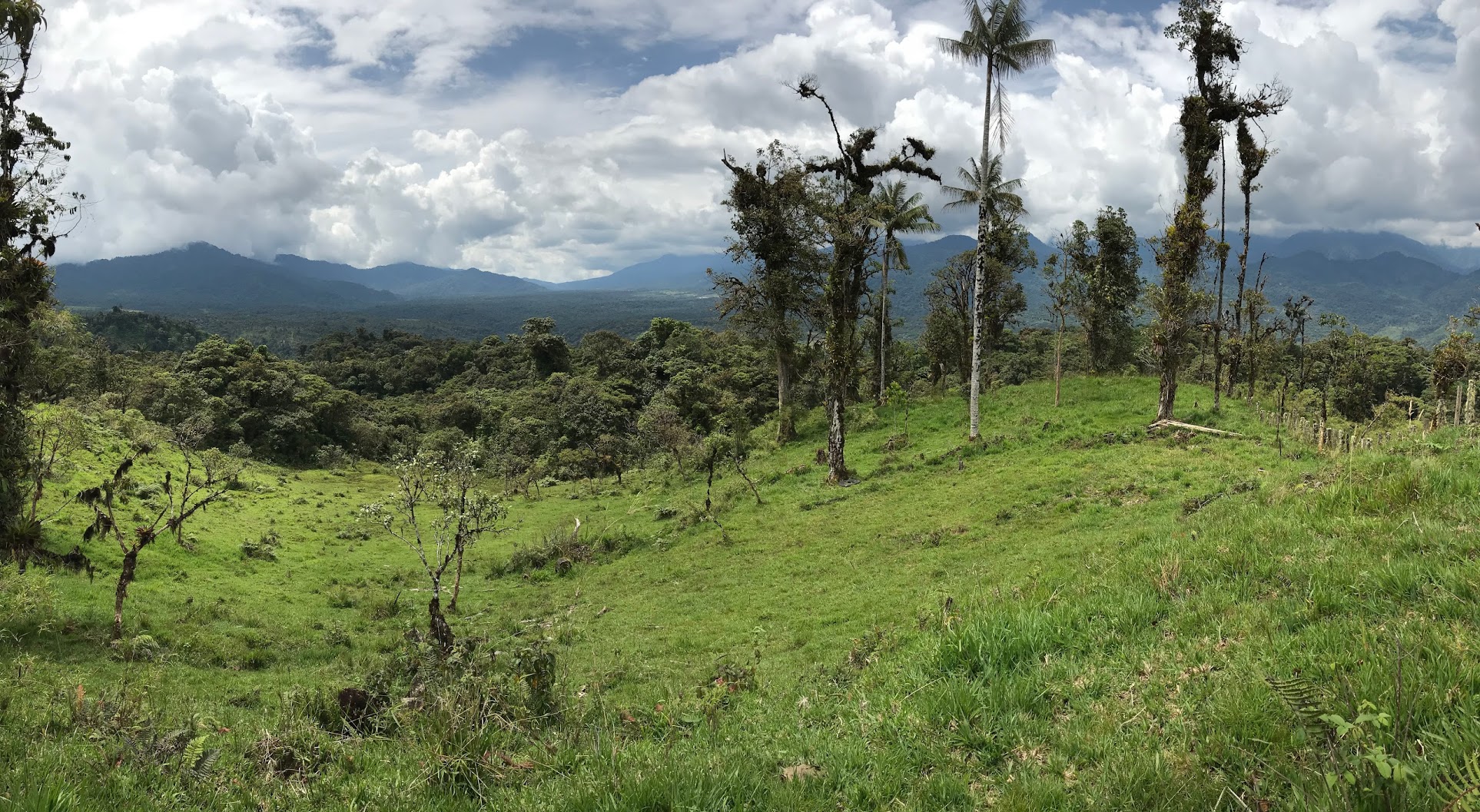
In Ecuador’s northern Andes, Andean bears increasingly traverse fragmented forests, farm lands, and settlements as agriculture expands and climates shift, heightening conflict risks.
This research project by the Earth and Life Institute, UCLouvain in Belgium, develops a predictive modeling framework to anticipate bear movements and guide targeted conservation. Using GPS collar data, camera traps, and landscape variables, it analyzes how vegetation, topography, water, and infrastructure shape behavior. Spatial analyses inform an Agent-Based Model simulating bear responses under varied scenarios, revealing conflict arises from multi-scale interactions, not just overlap. The project adds geofencing alerts, rapid responses, community deterrents, and long-term monitoring to identify high-risk corridors and seasonal patterns, supporting evidence-based coexistence strategies.