

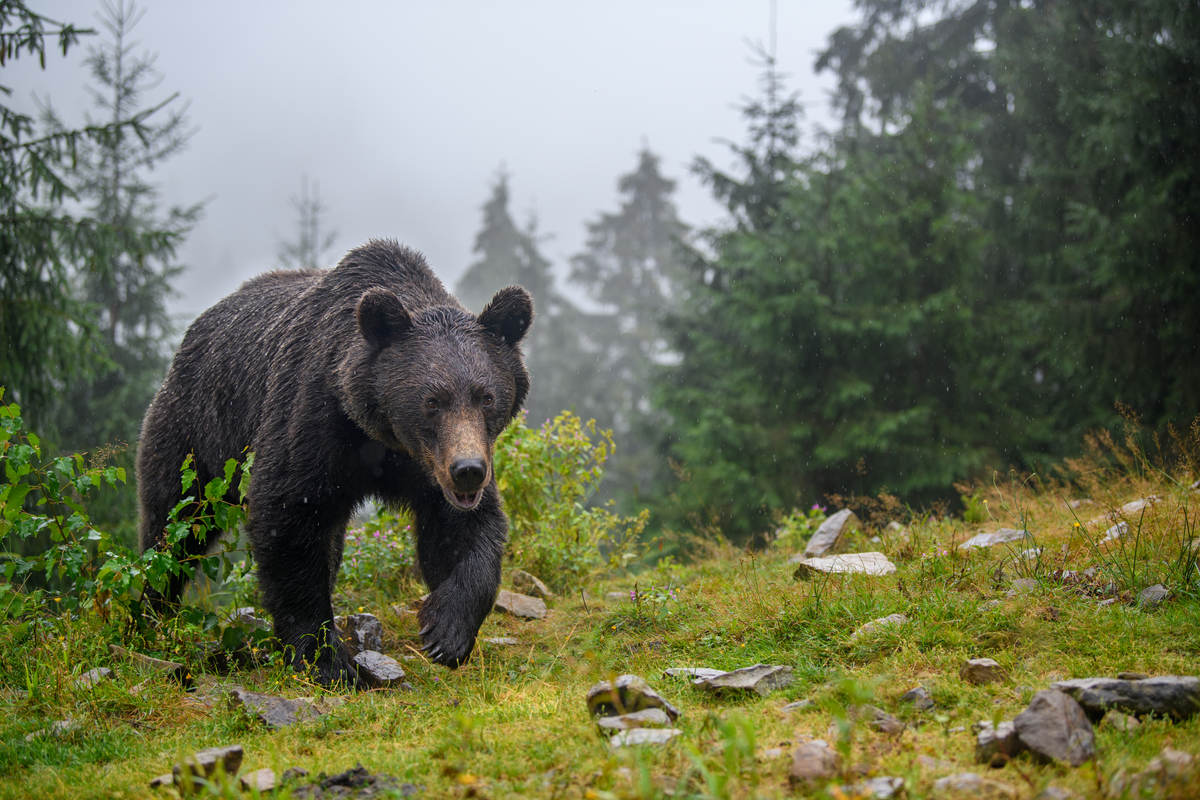
This project is rooted in an increasing trend of Human-Bear Conflicts recorded over the last decade in the Western Black Sea region (specifically the Kastamonu area): one of the last strongholds for brown bears in Türkiye. As rural tourism, agricultural expansion, and infrastructure development have encroached upon traditional habitats, encounters between humans and bears have become more frequent and, unfortunately, more antagonistic. Local reports indicate that these encounters often lead to crop damage, livestock loss, and a growing sense of fear among the local populace. Moreover, the economic strain transforms the bear from a symbol of natural heritage into a perceived “pest” or “enemy,” fostering antagonistic attitudes that can lead to illegal retaliatory killings.
Secondly, there is a psychological and educational vacuum. In the rural areas, children often navigate forested paths to reach schools, yet they are rarely equipped with the necessary knowledge to understand bear behavior or implement safety protocols. This lack of “Bear-Aware” literacy creates a culture of fear rather than respect. Without targeted intervention, this fear-based perception will be passed down to the next generation, ensuring that conservation efforts remain socially unsustainable. Furthermore, there is a significant scientific data gap; while we know bears exist in substantial numbers, we lack localized, high-resolution data on how they utilize specific corridors near human settlements.
This new project by GENÇFED (Youth Clubs Federation) asks whether the scouting movement, with its disciplined framework and deep-rooted presence in Kastamonu, can serve as the missing link to solve these issues. Current conservation efforts often remain top-down and struggle to engage the community on a grassroots level. The “main question” of this project is whether the team can utilize citizen science and youth leadership to create a low-cost, high-impact monitoring and education network. If we do not address the lack of awareness and the absence of localized monitoring now, the increasing frequency of food-conditioning (bears becoming habituated to human waste) will lead to more dangerous encounters, ultimately forcing the removal or destruction of these keystone individuals. By addressing the root causes—ignorance of safety protocols and the disconnect between the public and scientific data—this project seeks to secure the future of the Brown bear in Türkiye through a model of informed, respectful, and safe coexistence.