

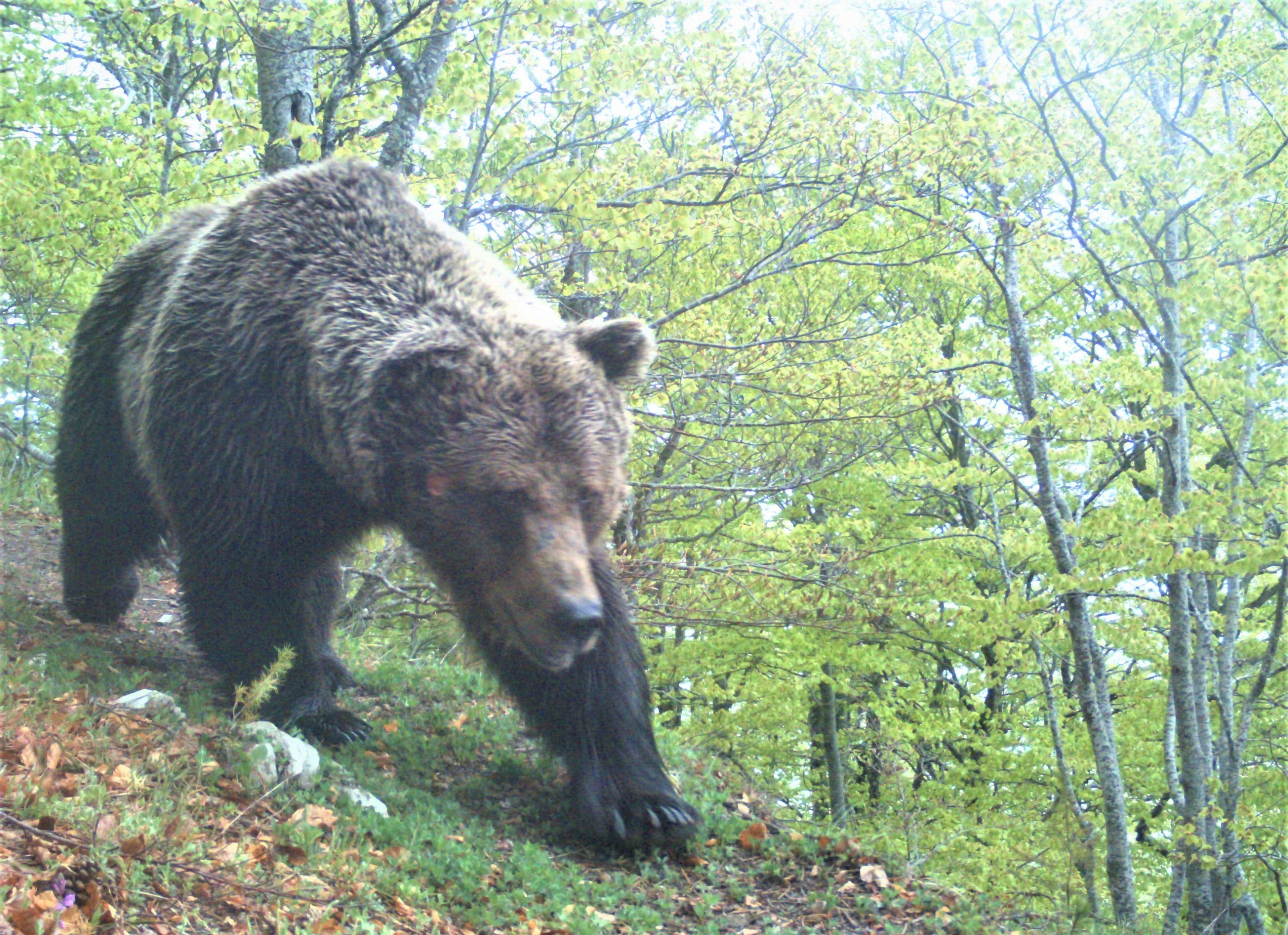
Although the country has declared a nationwide hunting ban in recent years and snaring is generally banned as a hunting method, the illegal setting of wire snares continues, particularly in remote and mountainous areas. These tools are handmade, not expensive, easy to set and difficult to detect, which makes them widely used for capturing wild boar and other game species. However, snares are non-selective and frequently injure or kill non-target species, including the brown bear.
In southeastern Albania, especially within and around Prespa National Park and Mokra Region, several cases of bears caught in snares have been documented in recent years. In some cases, animals have been severely injured; in others, they have died due to prolonged suffering or because releasing them posed a risk to those who set the traps and so the safest way was to kill the animals. These incidents highlight a systemic issue rather than isolated events. Reports from different parts of the country, with a higher frequency in the southeast, indicate that illegal snaring is an ongoing and neglected threat. Although most cases of trapped bears are non-target incidents, there are also cases in which bears are intentionally targeted. In some rural areas, local farmers, livestock keepers and beekeepers attempt to prevent repeated damage to crops, livestock, or beehives by illegally setting snares aimed specifically at bears. These actions are often carried out quietly and without reporting, as those responsible are aware that such practices are illegal.
This situation is closely linked to the broader context in Albania, where effective wildlife damage compensation schemes are not yet established and preventive measures, such as electric fencing, livestock guarding dogs, or bear-proof waste management, remain limited or financially out of reach for many rural communities. As a result, some affected individuals turn to illegal and harmful solutions out of frustration or economic necessity. Addressing illegal snaring, therefore, requires not only enforcement and removal of traps, but also greater attention to prevention, awareness, and long-term coexistence measures that reduce the motivation for retaliatory or preventive killing.
The main aim of the project by PPNEA (supported by Bears in Mind since 2026) is to halt illegal snaring as a hunting practice and as a preventive measure against bear damage. Specifically, the project seeks to reduce the use of wire snares in key bear habitats by addressing the problem at its source through direct removal, stakeholder engagement and awareness-raising. At the same time, it aims to promote and encourage practical prevention measures.